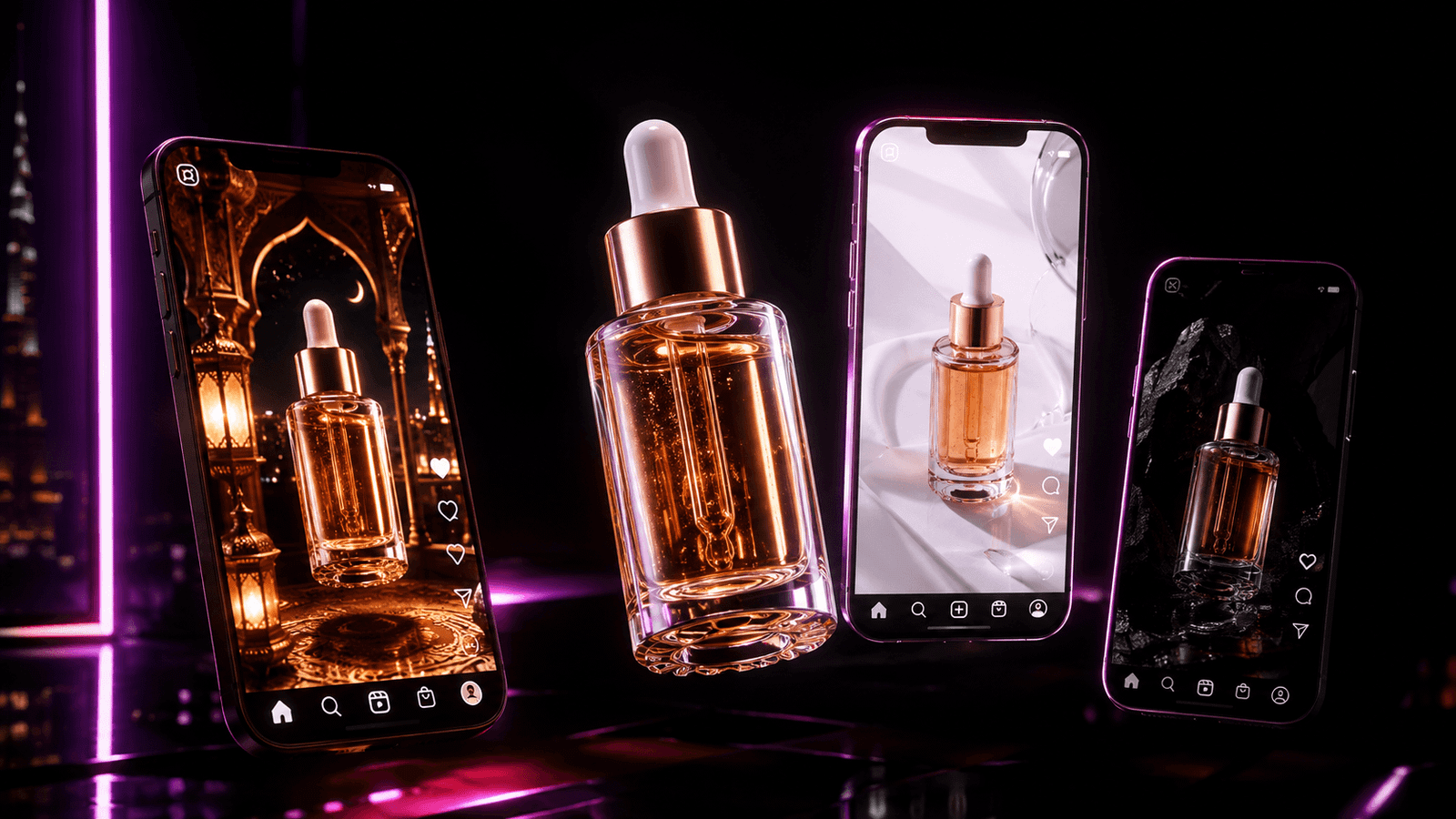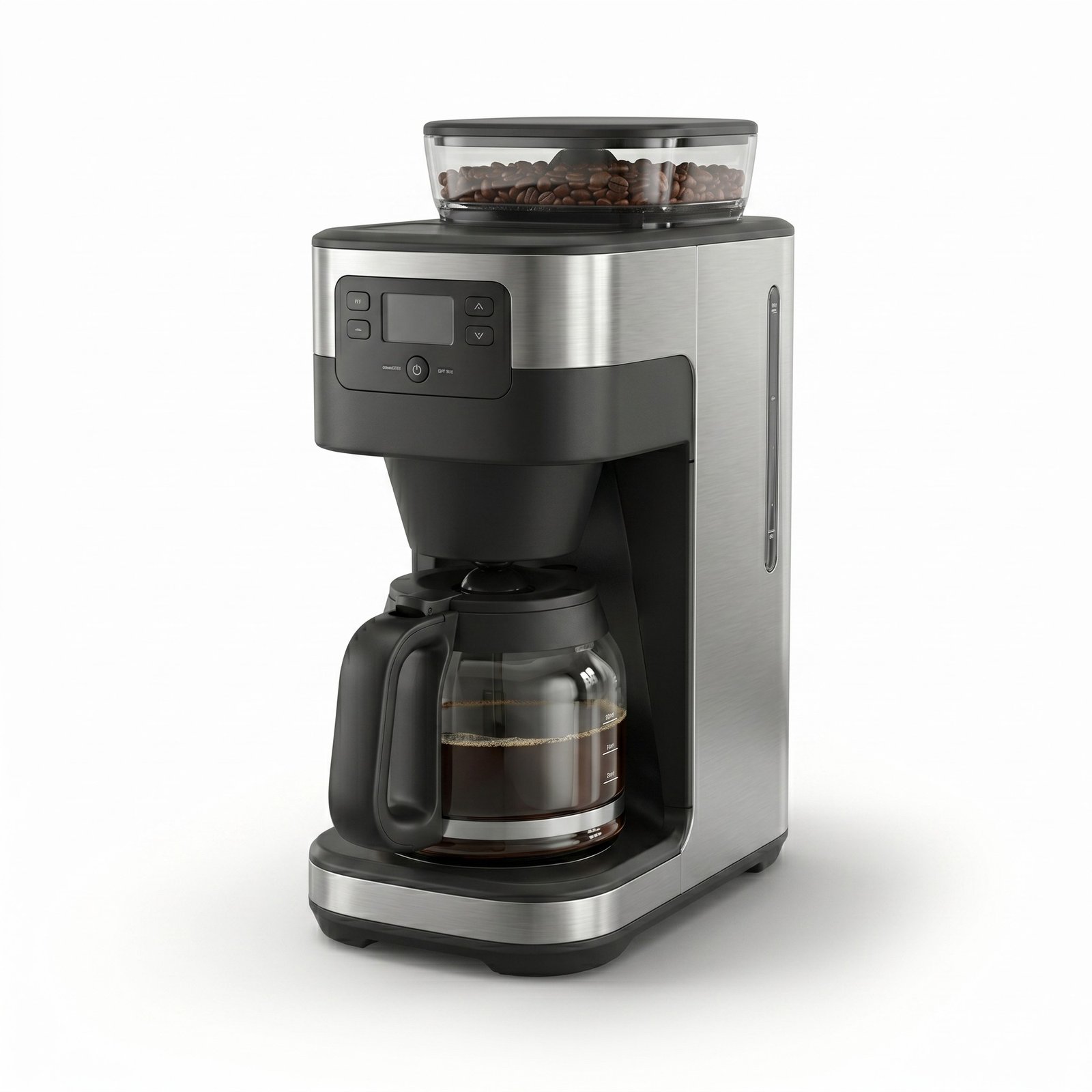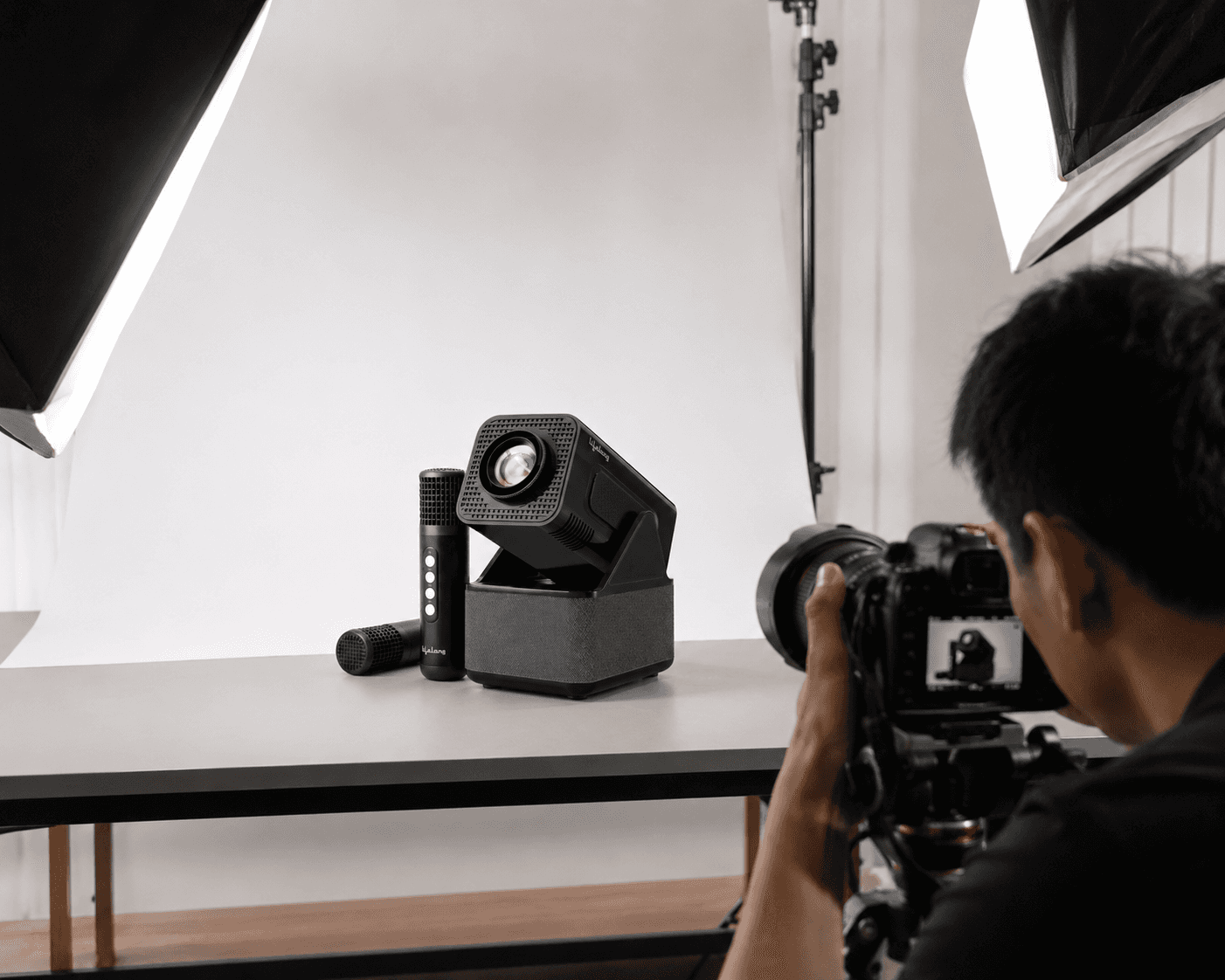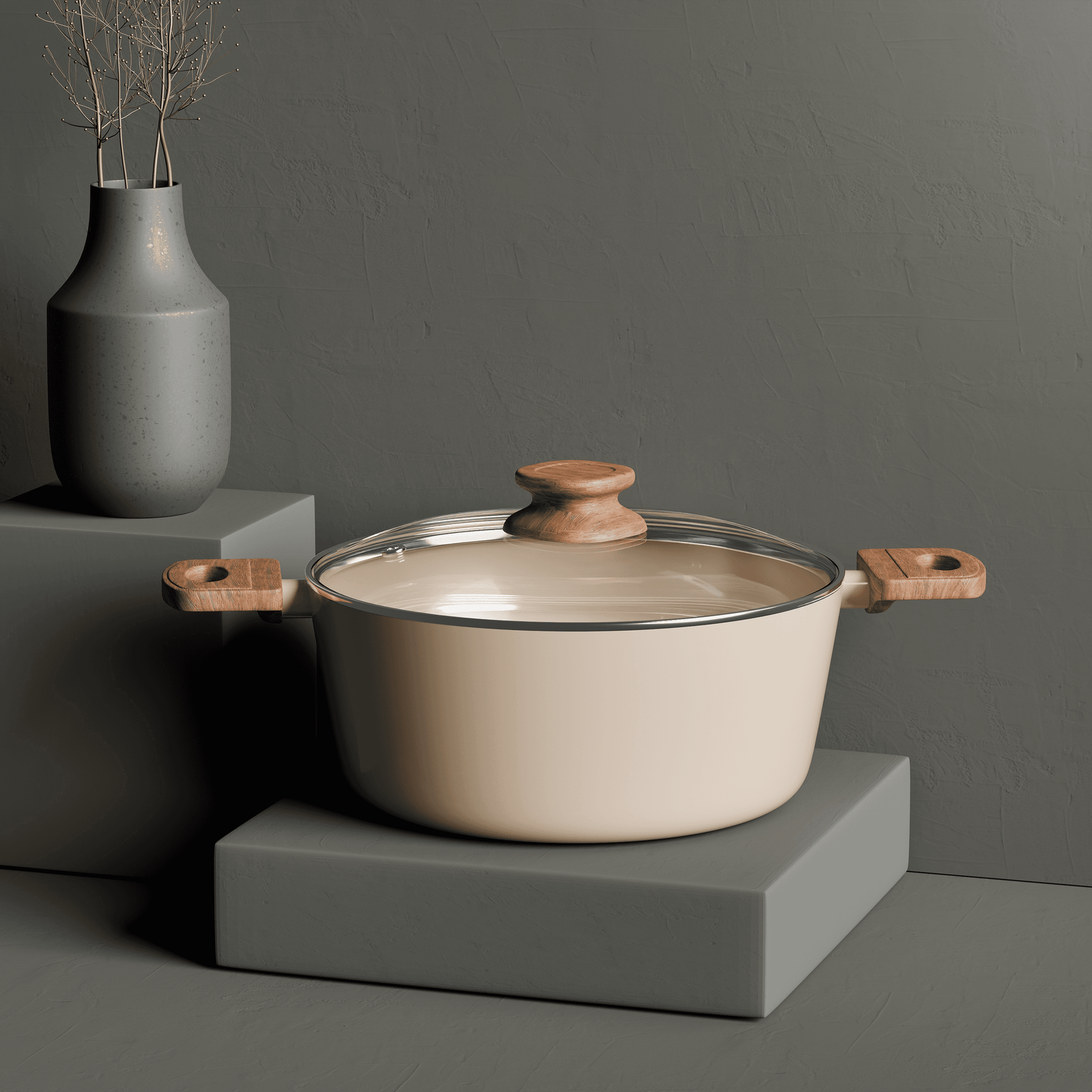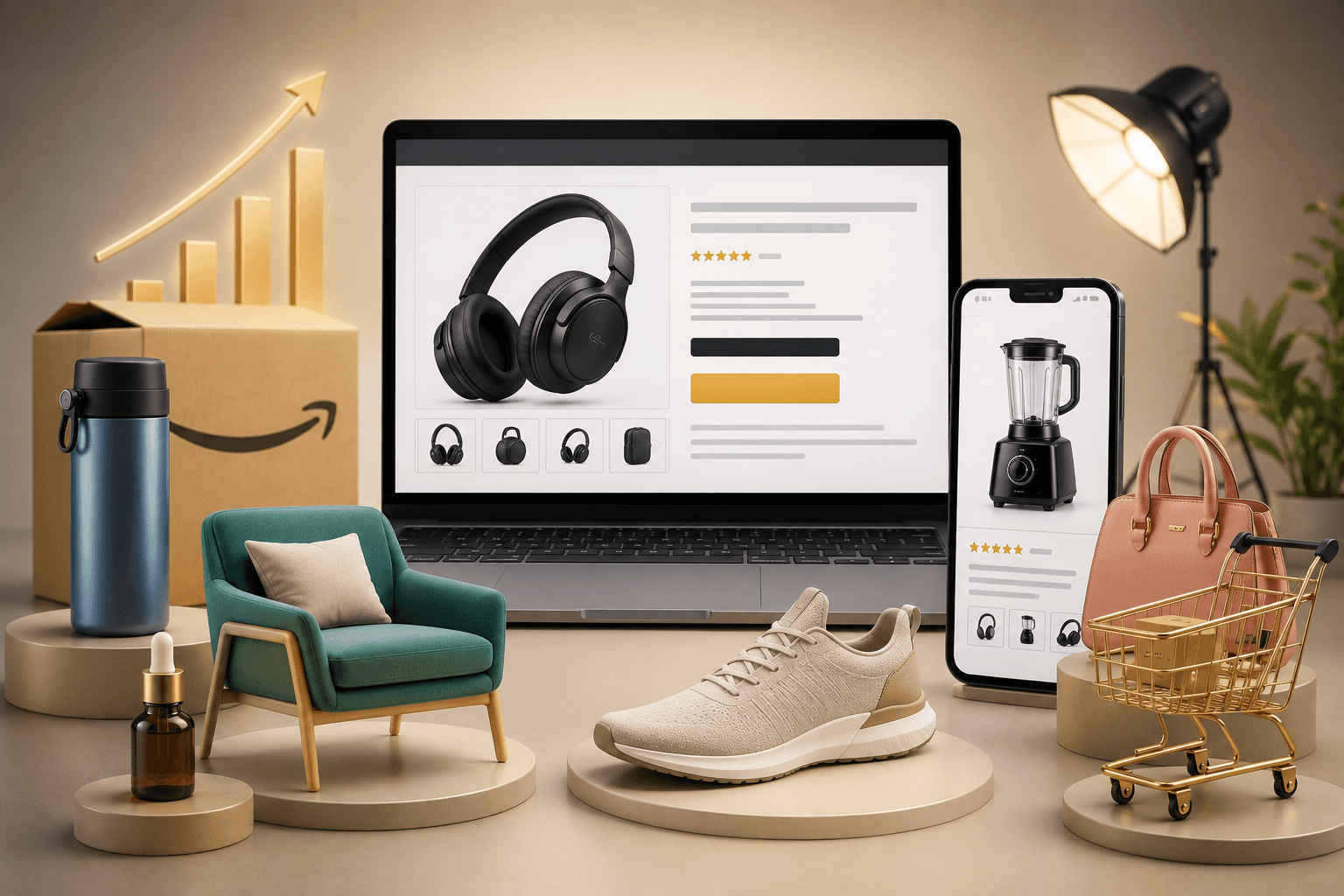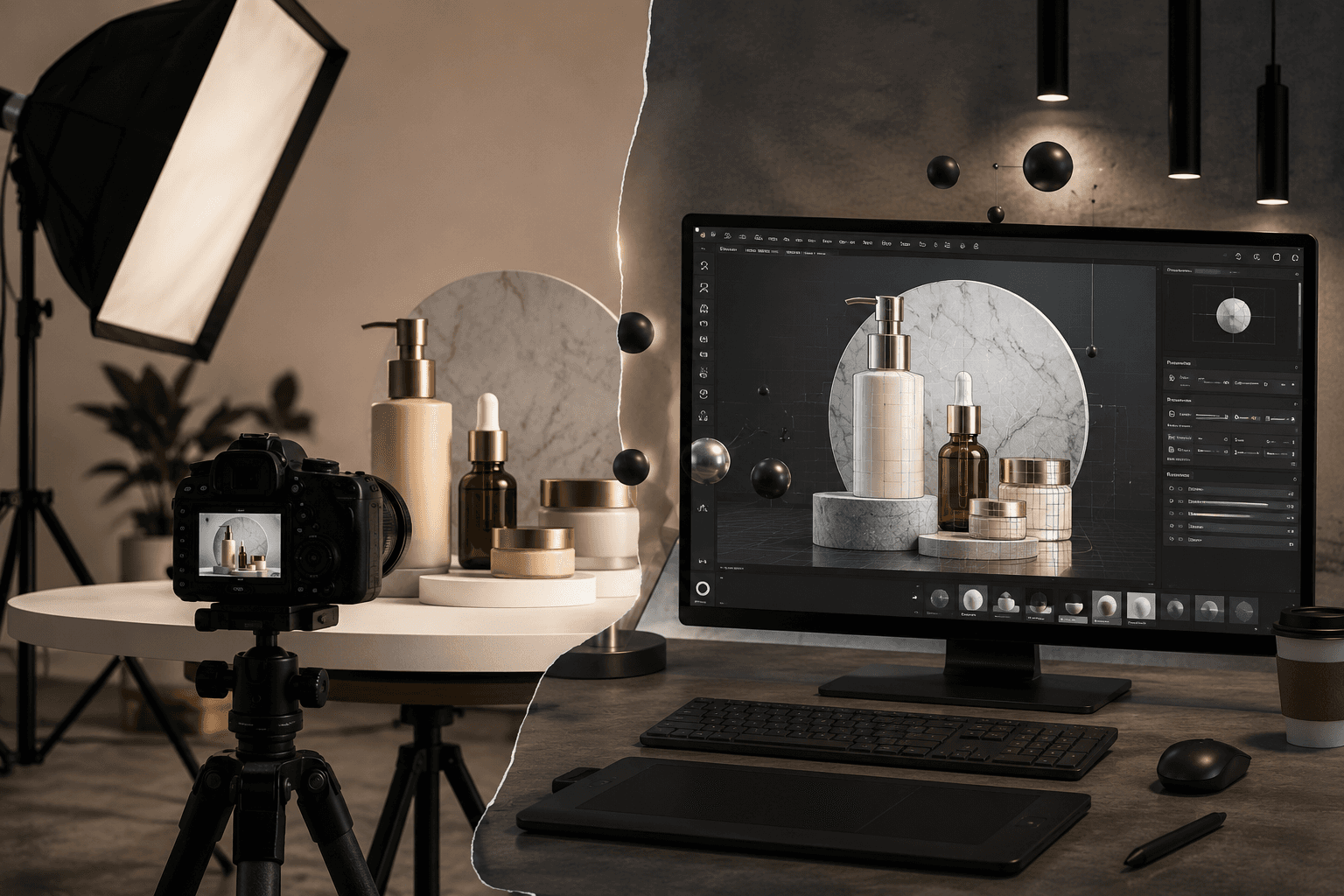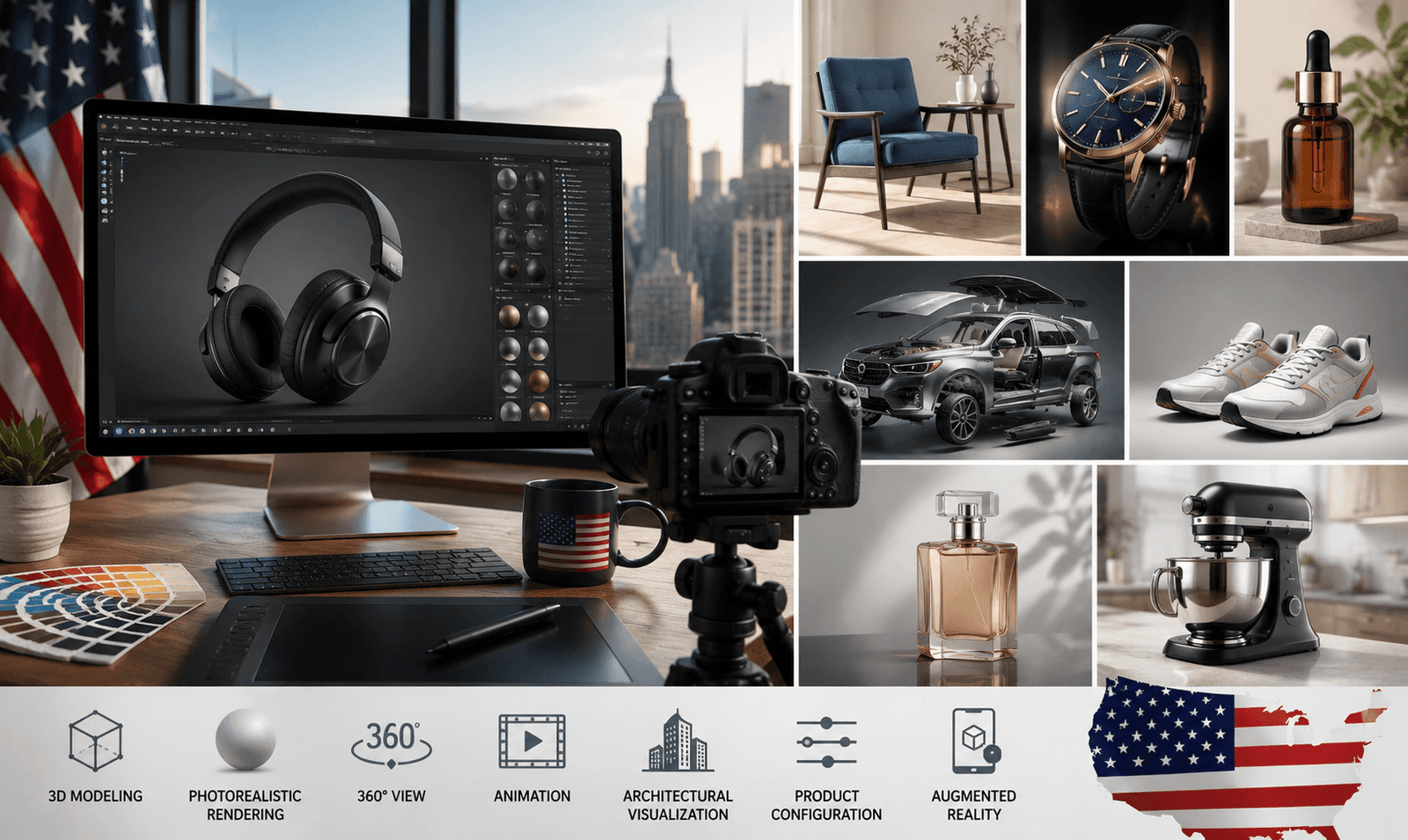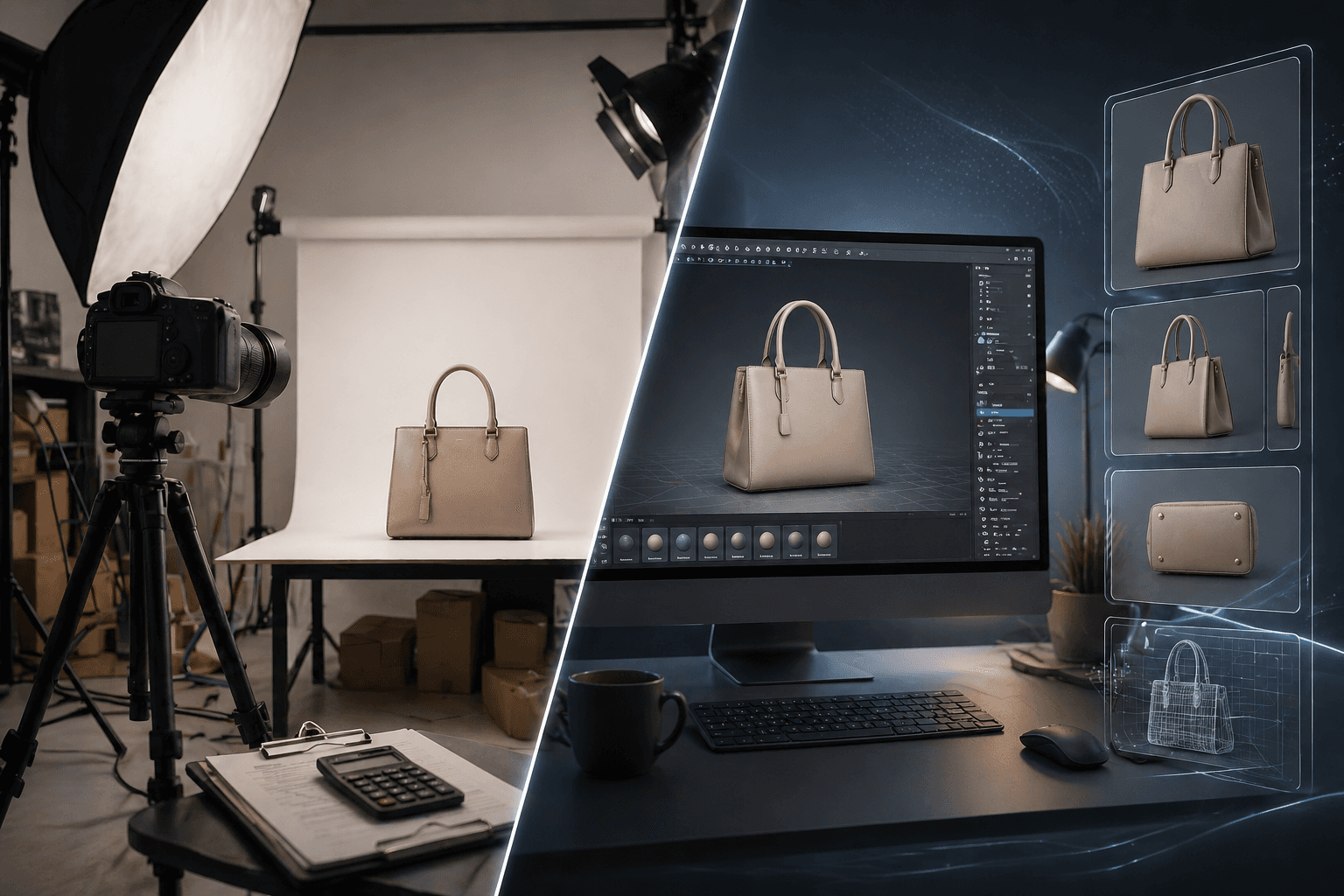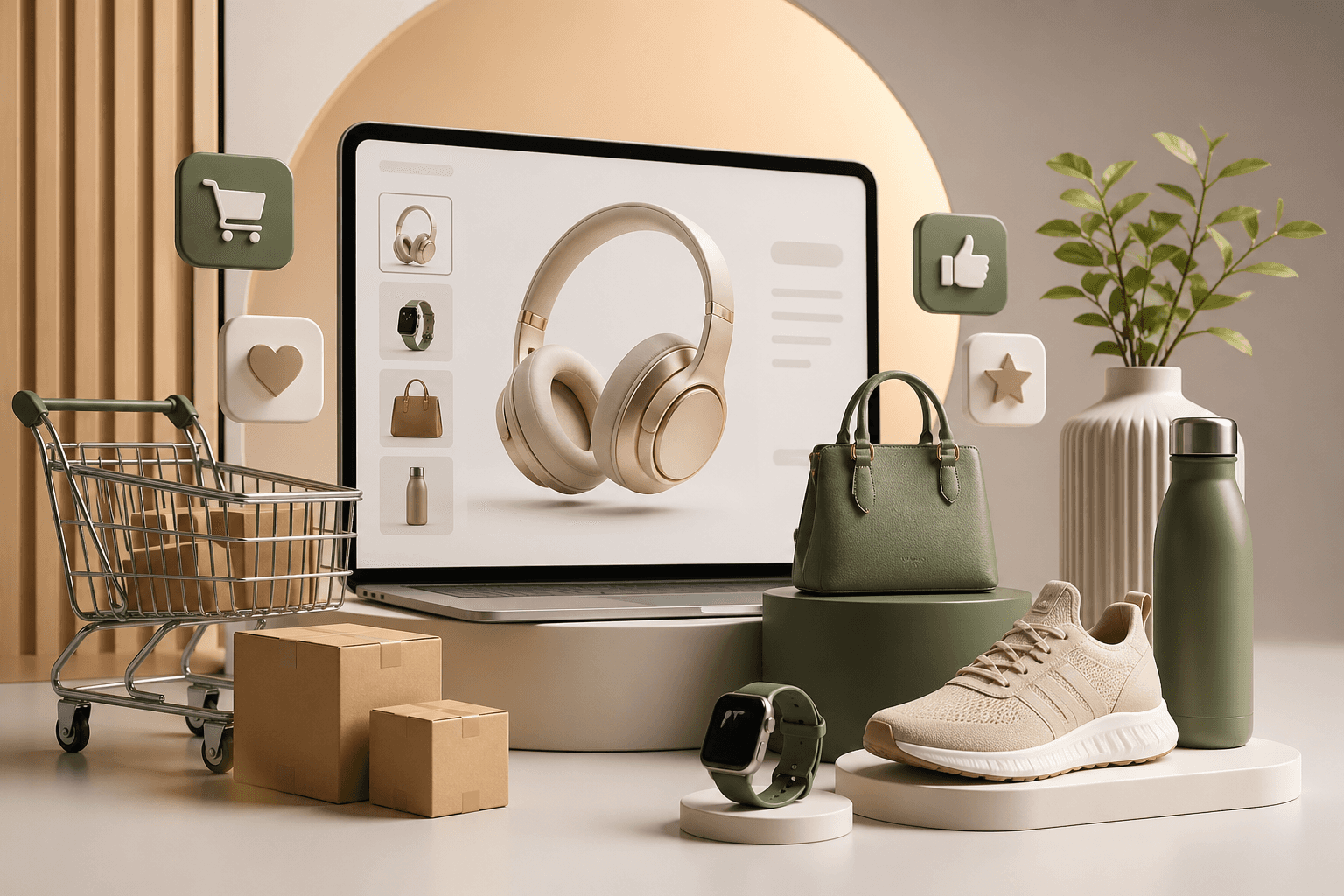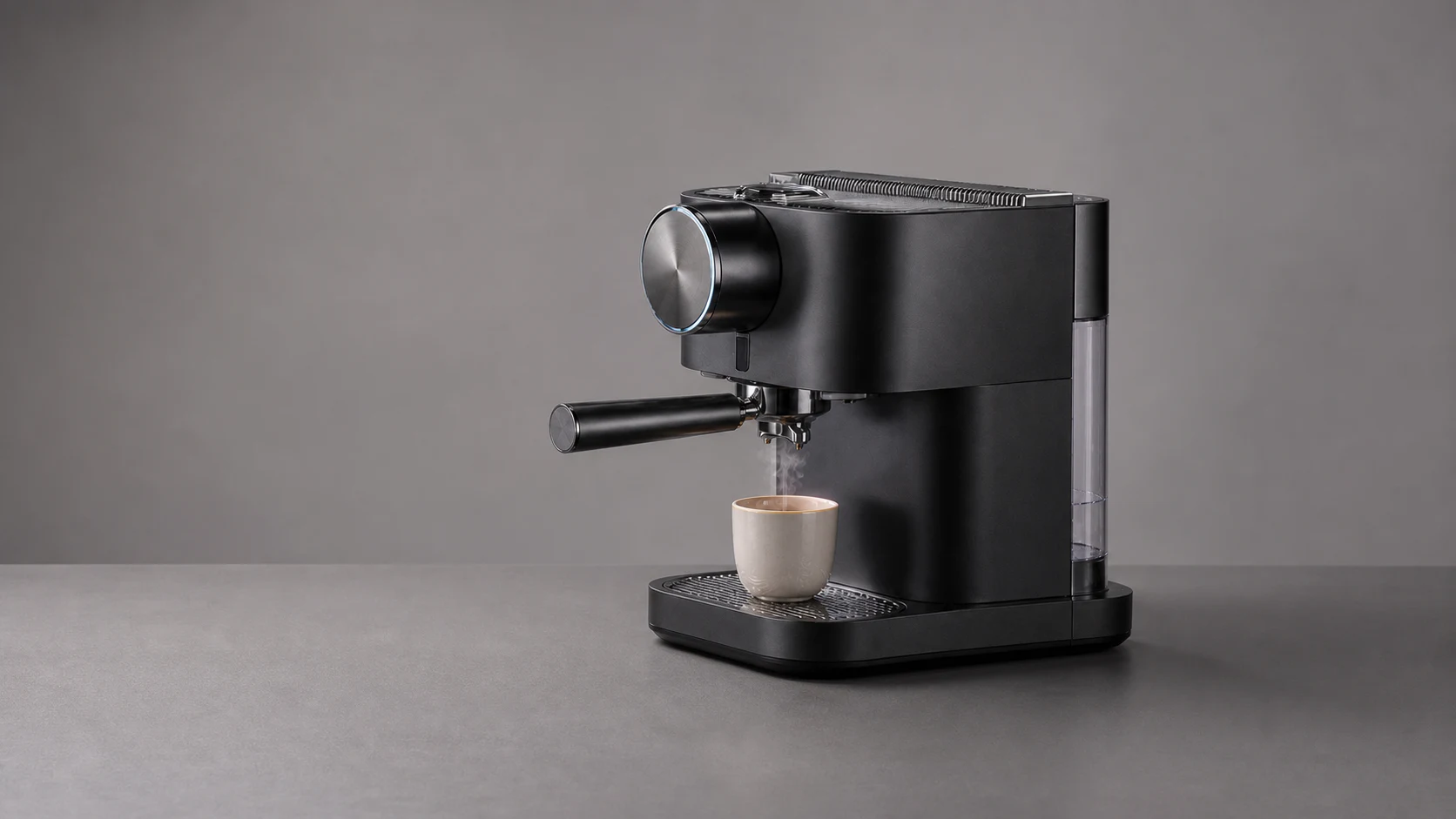
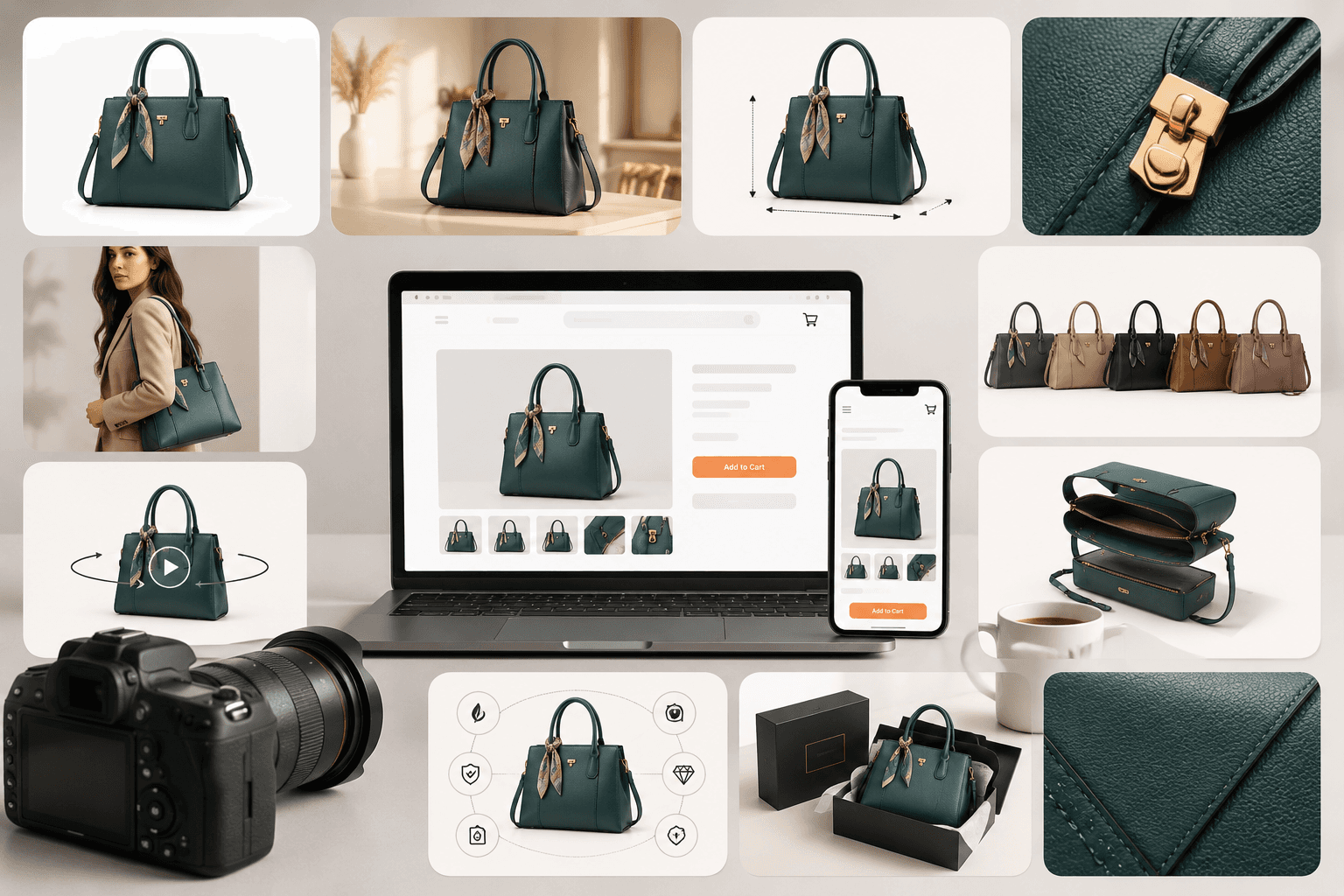
Ten image types cover almost every job a product page has to do, from the search-result thumbnail that wins the click to the AR asset that closes the sale. A serious catalogue uses most of them; a strong one uses all ten.
1. Silo / white background
Product isolated on pure white, no props, no context. Foundation image, wins clicks in search results, mandatory for the Amazon main image slot. Standard specs: RGB 255,255,255 background, product filling 85%+ of the frame, minimum 1000px on the longest side, sRGB, JPEG.
2. Lifestyle
The product shown in a real-world context, placed in a scene that is relevant and aspirational. Builds desire and emotional connection. Used in Amazon secondary slots, Shopify collections and social, Instagram, Pinterest, TikTok.
3. Detail and close-up
Zoomed into specific features, fabric texture, a control interface, a stitching detail, a hardware finish. Trust-building. Shows quality at microscale and answers the questions a buyer would otherwise ask.
4. Infographic and feature callouts
A product image with overlaid text and graphics, dimension callouts, feature annotations, material labels, certification badges. Communicates key information visually and cuts the amount of text a mobile buyer has to read.
5. A+ content modules
Branded image modules, comparison charts, lifestyle photography, feature panels, brand story sections. Amazon Brand Registered sellers only; documented to lift conversion up to 8% and improve session duration. Design mobile-first.
6. 360° interactive
A series of renders (24 to 72 frames) captured at equal intervals around the product, presented as an interactive spinning viewer. Answers "can I see the back?" without a returned parcel. Reduces returns and increases time on page.
7. Comparison and variant
Multiple variants, colours, sizes, finishes, shown side by side in one image, or individually with consistent visual treatment. Lets a buyer evaluate the full range in one look and reduces purchase uncertainty on variant-level listings.
8. Scale and size reference
The product placed next to a familiar object, a hand, a common household item, a piece of furniture. Communicates physical dimensions without a spec table and cuts "it's smaller than I thought" returns.
9. Packaging and unboxing
Retail packaging and the product being revealed from it. Builds trust through perceived packaging quality, confirms contents, and matters more than most brands think for gift purchases.
10. Augmented reality assets
AR-ready 3D files that let a customer place a digital version of the product in their real environment through a smartphone camera. Try-before-buy. Documented conversion lifts up to 94% and lower return rates. Standard formats: USDZ for iOS, GLB for Android and web.