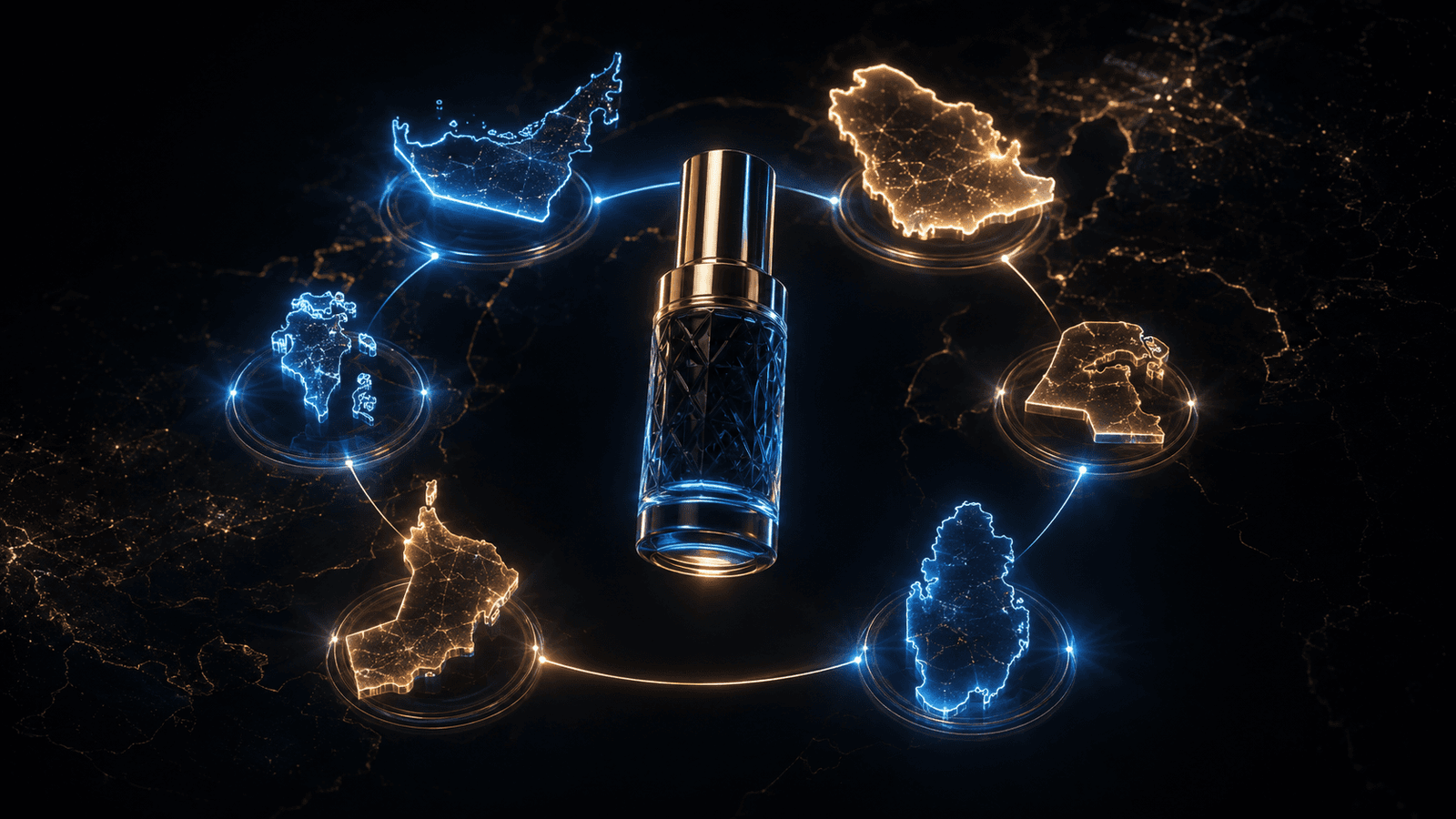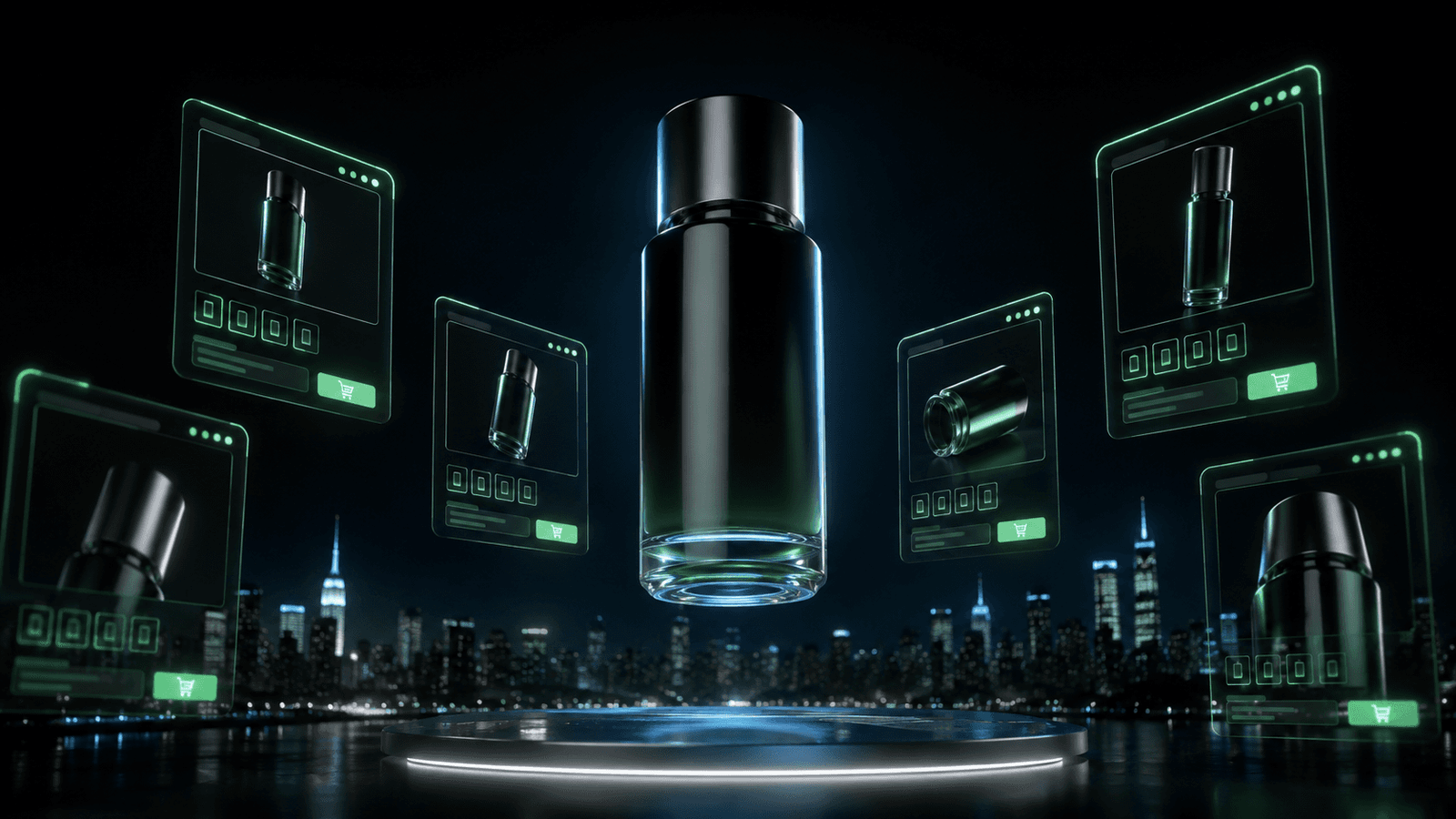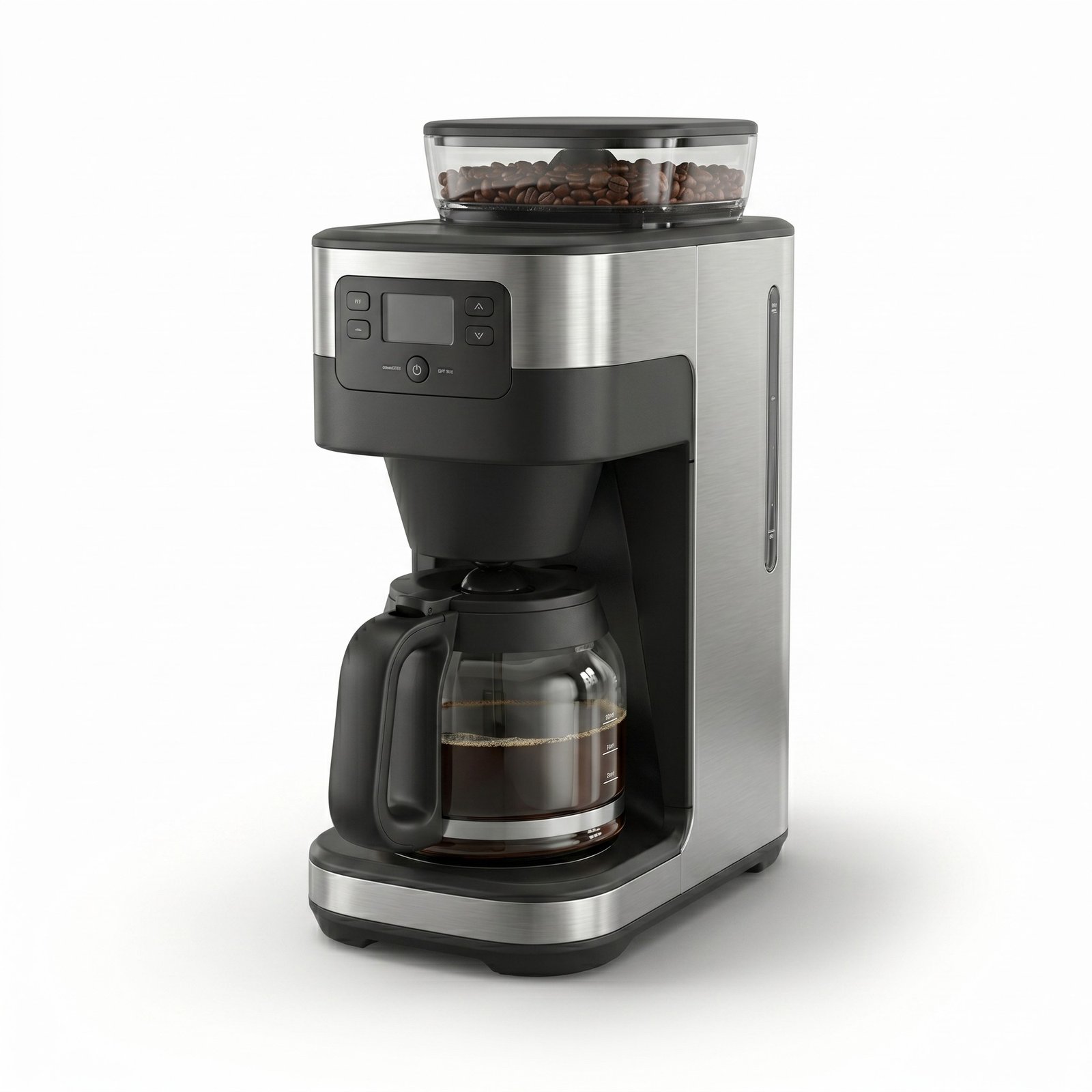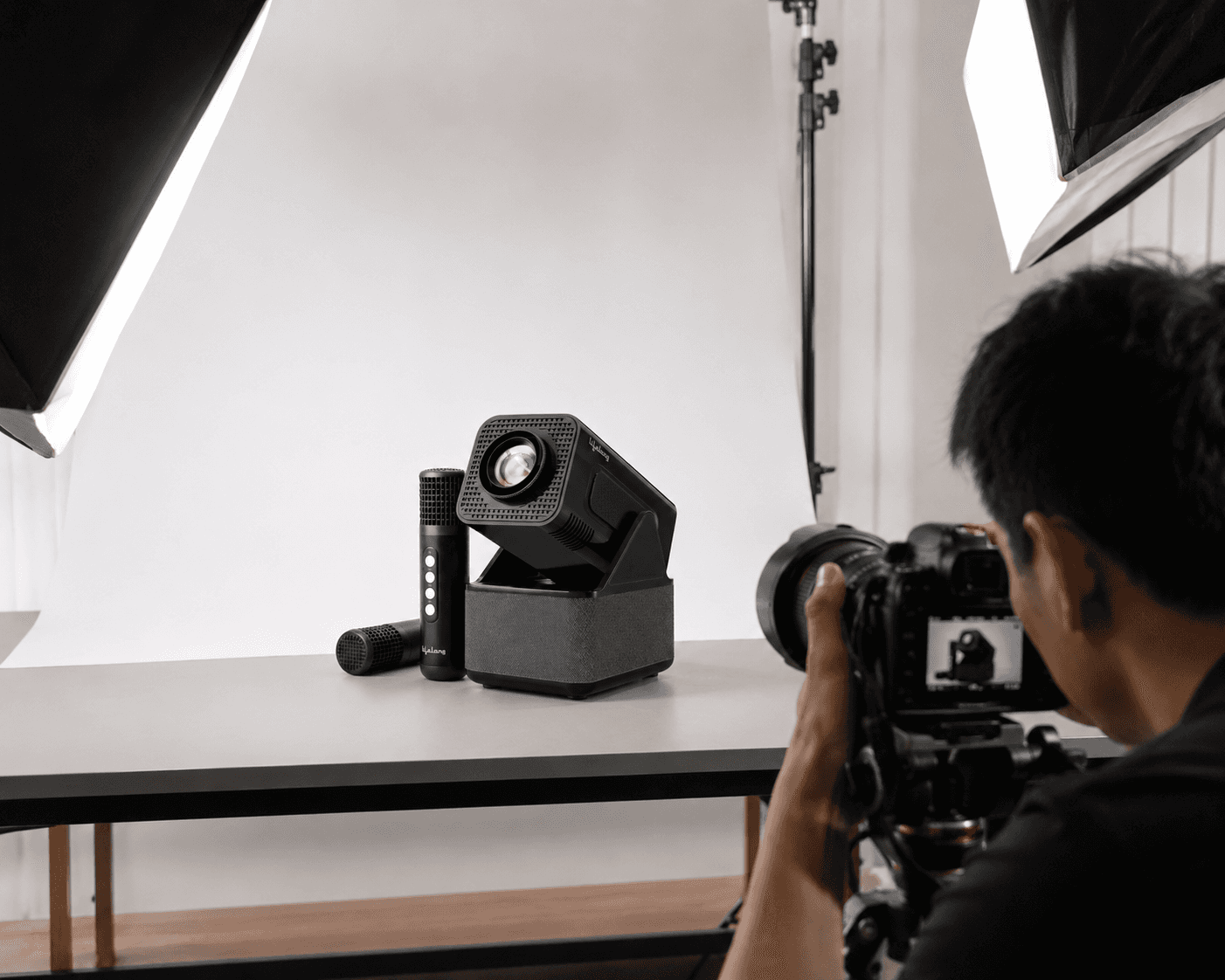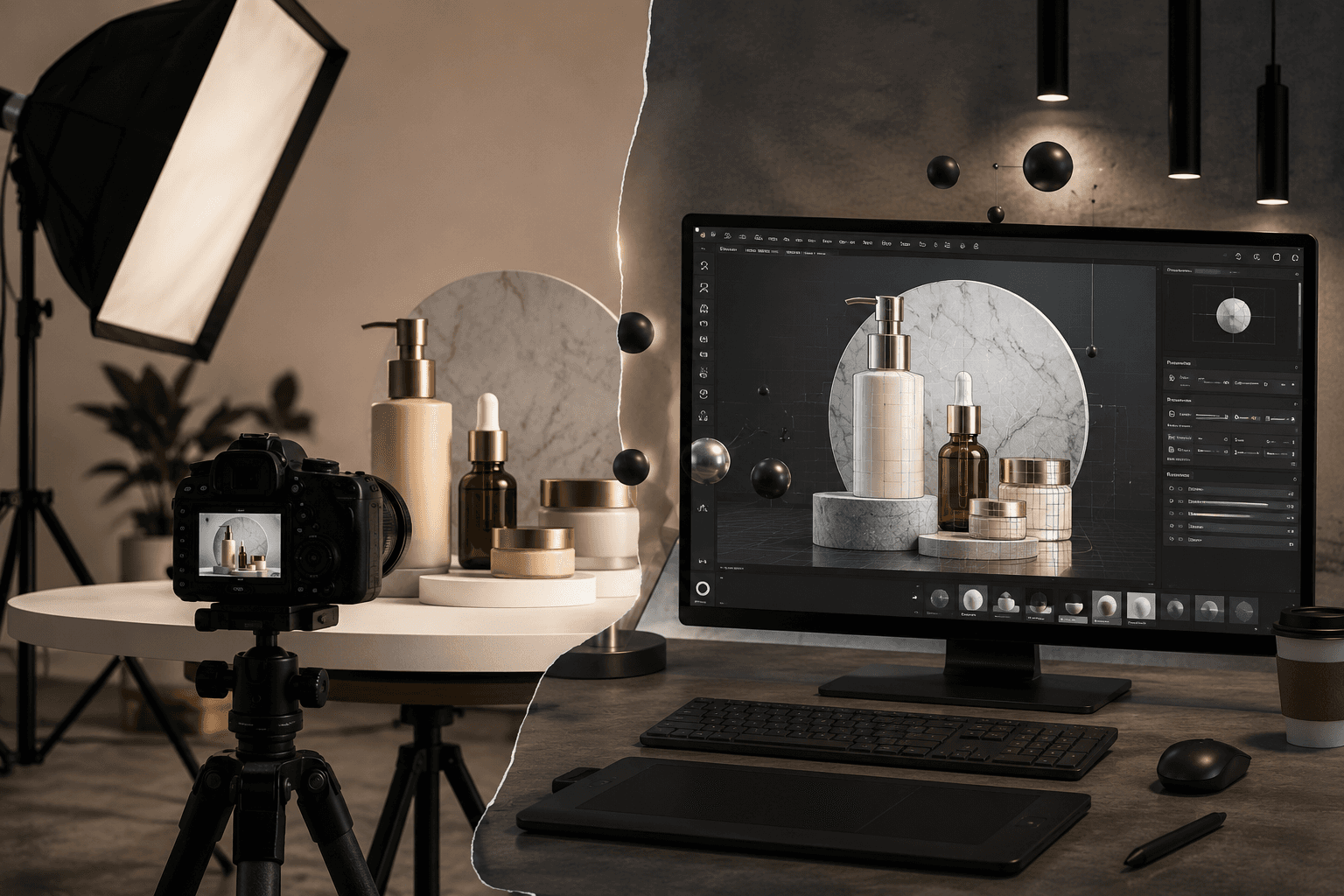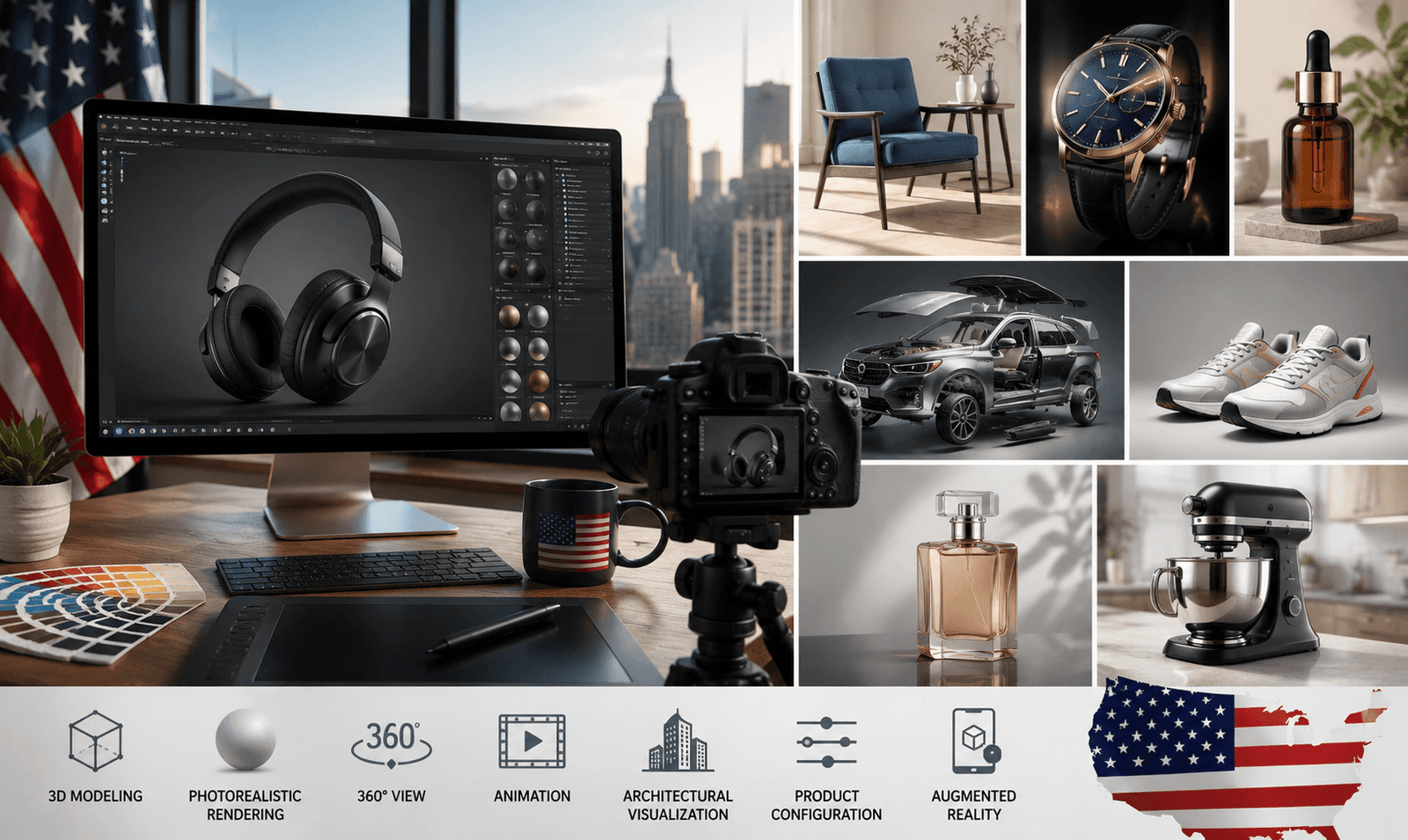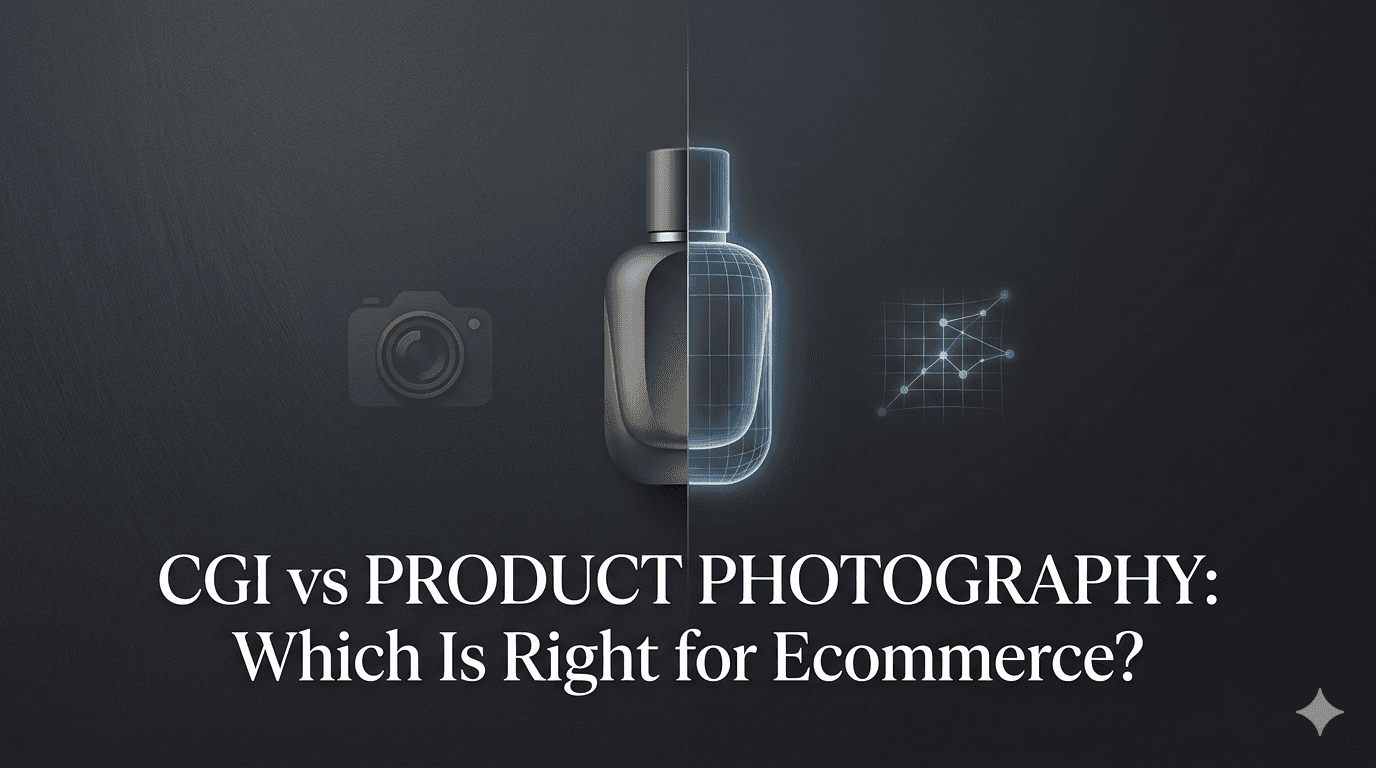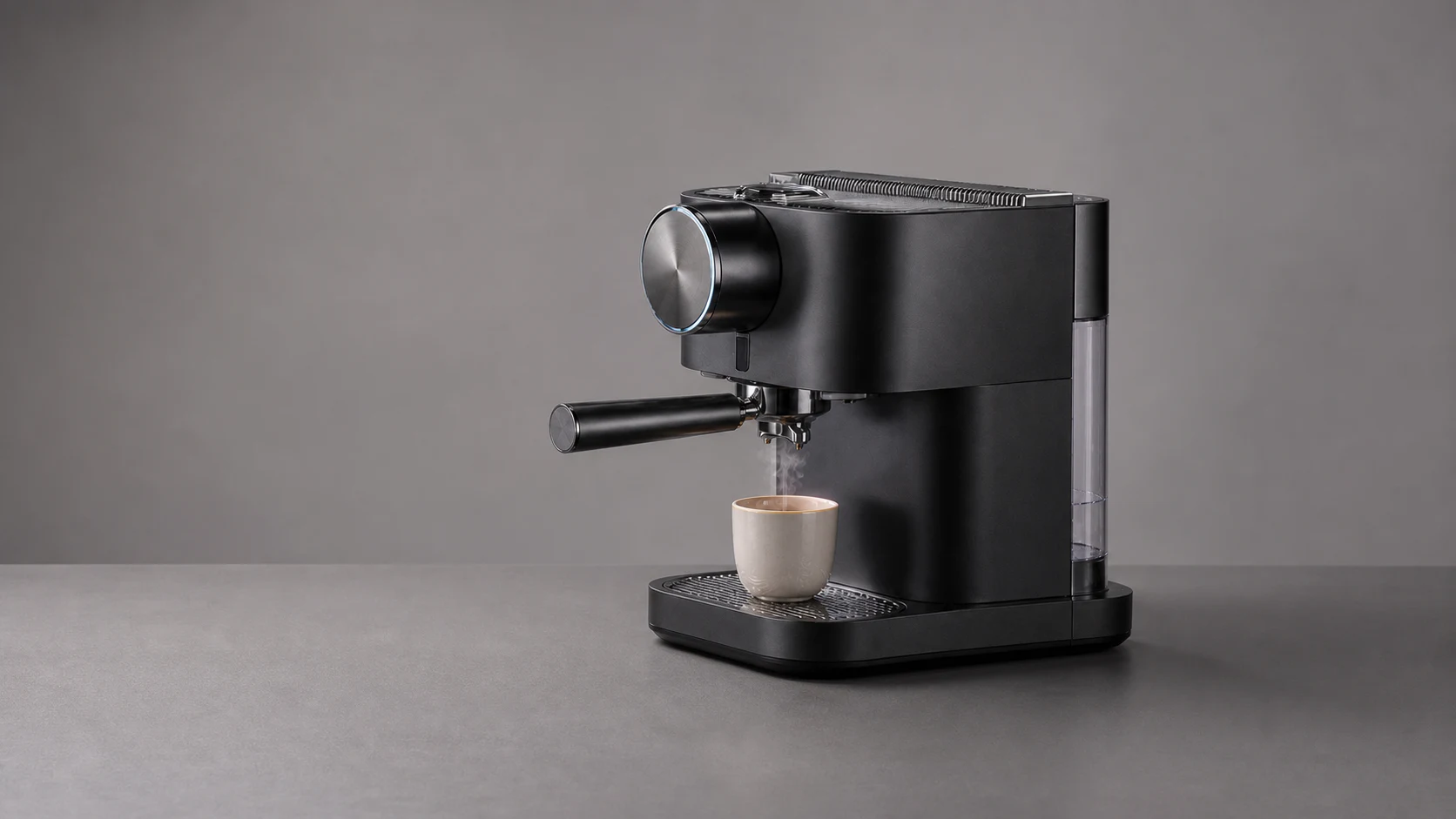

3D product visualization is on track to become the default production method for ecommerce imagery by 2027, not because photography stops working, but because the economics, the speed and the pre-launch case all point one way. Photography keeps a real role in editorial and luxury, but stops being the pipeline commerce actually runs on.
The market signal
The AR and 3D visualization market was around $5.8B in 2024 and is projected to reach $38.5B by 2030, a 35.8% CAGR. Global ecommerce is heading toward $3.88T in 2026. The demand for product imagery across PDPs, social, email, marketplaces and AR experiences is not something a photography-first pipeline can keep up with economically.
Why 3D is winning, mechanism by mechanism
First, the unit economics have flipped. A shoot is a fixed cost every time, space, sample, crew, retouch. A 3D model is a fixed cost once, and the marginal cost of the hundredth render approaches zero. At any brand that runs more than a handful of images per product per year, the maths stops being close.
Second, the speed gap has become commercially damaging. A shoot cycles in three to six weeks; a render cycles in three to seven business days with revisions in twenty-four to forty-eight hours. In a trend-driven category, that difference decides who is on shelf first.
Third, pre-launch imagery is possible now. A render can be built from CAD and packaging dielines before the first production unit exists, which means marketing can be finished while manufacturing is still running. Photography has no answer to this at all.
Fourth, the material barrier is gone. AI-enhanced rendering pipelines simulate refraction, liquid depth and subsurface scattering with results that experienced photographers regularly mistake for camera captures. The 'CGI looks fake' argument that held in 2018 does not hold in 2026.
Fifth, the platforms are already there. Amazon, Shopify, Flipkart, Meta and Google have all invested in 3D and AR infrastructure at platform level. The ecosystem is pointing where 3D lives, not where photography lives.
Where photography still wins
- Editorial fashion, where the moment and the light matter more than the object
- Luxury contexts where the provenance of a real photograph is part of the brand story
- User-generated content and documentary storytelling
- One-off images of a single product a brand will never need again
None of these categories are small. They will all still be photographed in 2027. What is going away is photography as the default first thought for a commerce catalogue, because for commerce, the switch has already made itself.
The India-specific tipping point
India's D2C market keeps expanding with new brands and constant SKU additions. Domestic 3D production costs have fallen significantly, closing the gap with photography even for single-product work. The 2027 timing lines up with when most Indian D2C brands will either commission their first 3D master or lose ground to a competitor that has.
What smart brands are doing now
Commissioning 3D models of core products so a permanent asset library exists, one that serves next season, next platform and next campaign at zero marginal cost. The alternative is paying full production for every one of those, which is the cost this whole shift is removing.